

Reviewing Georgia Oakley’s Sense and Sensibility
It’s at all times an endeavor to provide a recent movie model of a Jane Austen novel. Georgia Oakley’s 2026 tackle Sense and Sensibility, starring Daisy Edgar-Jones as Elinor Dashwood and Esmé Creed-Miles as Marianne, was profitable in distinguishing itself from different variations, notably from my favourite Jane Austen movie adaptation, Ang Lee and Emma Thompson’s 1995 Sense and Sensibility. Although the 1995 adaptation stays my favourite, I went into my viewing of Oakley’s adaptation not anticipating the 1995 model, although I discovered a number of nods to it within the 2026 movie.
Emphases on the Pure World, Dashwood Household Dynamics
In a dialog with IndieWire, Oakley shares her imaginative and prescient of Sense and Sensibility, which helps contextualize a few of the selections made within the movie:
Oakley…has lengthy been a fan of Austen’s first novel for its give attention to the evolving relationship between the eldest sisters and, she mentioned, for the “wildness to it.” Like screenwriter Diana Reid, Oakley needed to foreground the “love story between the sisters,” somewhat than their respective romances. Not like some latest variations of traditional literature, although, she didn’t really feel Austen’s narrative wanted updating or packaging in a recent solution to really feel related.
“I actually really feel that Austen was writing about issues that had been so inherently up to date that it didn’t want modernizing,” Oakley mentioned…
The “wildness” is one thing I skilled on a few ranges—in Oakley’s attentiveness to the panorama, which frequently feels sweeping and distant because the Dashwoods relocate to Barton Cottage in Devonshire firstly of the movie, and within the methods pure particulars are tied into contemplation of the characters. For instance, in a single scene, Marianne is proven protruding her tongue to catch falling raindrops and letting stream water rush over her naked ft. In one other, Margaret’s face and costume grow to be purpled with the wild blackberries she’s discovered close to the cottage. These illustrate each the wilderness that encompasses their new environment and the “sensibility” that runs via these two characters. Marianne, so moved by the world skilled via her senses, typically seems to overlook different features of herself. (One instance is her hair, which frequently hangs unfastened and somewhat bedraggled within the movie. Whereas this struck me as one thing that didn’t fairly appear proper for the time interval, it match the character Oakley had developed for Marianne.)
Scroll to proceed
A weekly letter from Verily
The
Friday Edit
Liking this? Get the perfect of Verily each Friday — courting, model, wellness, and the life you’re constructing.
The connection between the Dashwood girls is a side of this movie that notably stood out to me. Throughout a dialog with Edward, Elinor says, “Amongst my household, I’m happiest. Not all households share a standard disposition.” This was a hanging line as a result of I’ve at all times thought this story to be one among opposites—Marianne stuffed with sensibility studying sense and Elinor stuffed with sense studying sensibility. Whereas the sisters do study from one another on this adaptation, it’s clear that additionally they get alongside nicely and perceive one another higher than these exterior their rapid household all through the movie. Much less is product of their variations in approaching the world, and it appeared that even the better rifts (like Marianne chastising Elinor for not confiding in her solely to comprehend Elinor’s heartbreak at dropping Edward) had been rapidly smoothed over via the characters’ self-awareness and fast apology.
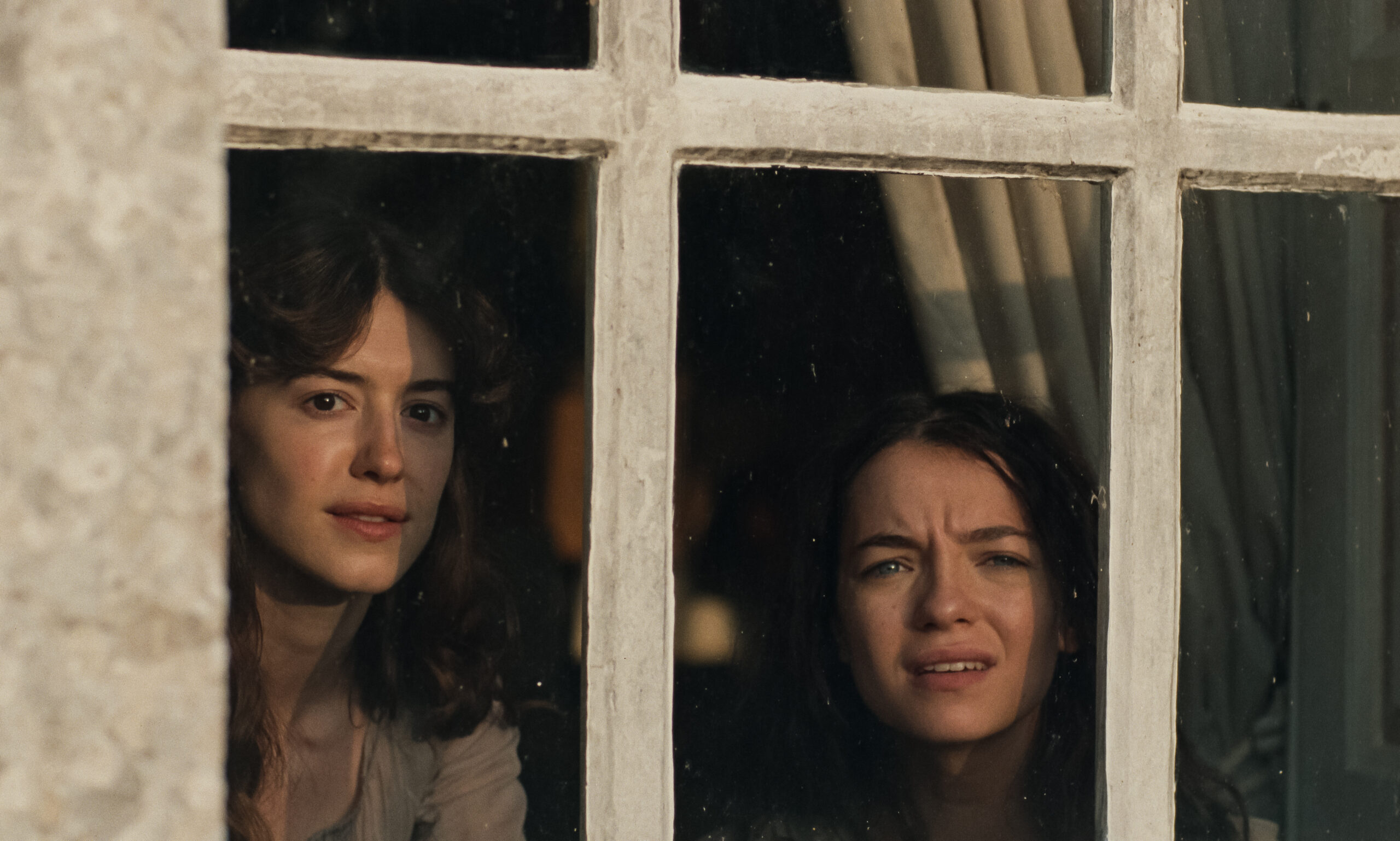
Close to the top of the movie, Marianne says to Margaret, “Locations are like folks, Margaret. They’re by no means what we anticipate.” I discovered it attention-grabbing that place was generally given even better prominence on this movie than folks. As Oakley instructed IndieWire: “I felt that nature was simply going to say a lot. It was going to type of fill the areas by way of understanding the emotional panorama of the characters as issues evolve, because the story evolves, as they transfer from place to put, because the seasons change.” Whereas, admittedly, I generally missed the emotional panorama that the pure settings had been serving to to convey, I did discover a specific consideration given to the faces of the Dashwood sisters; the digital camera typically zoomed in fairly carefully, nearly on the vary one might need on animals in a nature movie. Maybe this selection was made to assist viewers see on this facet of (human) nature, the inside drama unfolding on the characters’ faces.
The pure world additionally helped convey the sense/sensibility dynamic within the concluding scenes for Marianne/Brandon and Elinor/Edward. By the movie’s finish, the panorama helps us see Marianne has realized extra about sense and Elinor has realized to specific sensibility with better freedom. Close to a subdued brook, Marianne tells Brandon that with time she could come to like him much more than she did Willoughby, and the 2 sit close to one another on a log at a decent distance (which I see as “sense” embodied within the relationship between characters and their setting). Elinor and Edward in contrast meet in a rugged, rocky panorama, and at his proposal, each find yourself kneeling and exchanging a passionate kiss (which suggests in each character proximity and setting “sensibility”).
Deemphasis on Romantic Relationships and Plot Variations
I did really feel at occasions that due to the emphasis given to the Dashwoods’ household relationship and the bodily landscapes round them, the relationships between different characters had been both rushed or compressed. I felt this notably to be the case between Elinor and Edward and Marianne and Willoughby.
Whereas Elinor and Edward’s conversations are arguably extra emotionally charged than within the 1995 model (and so they even dance collectively at a ball after the revelation of Lucy Steele), I wasn’t in a position to sense their connection. Their relationship is rockier on this model, with Elinor asking Edward if he actually loves Lucy, Edward providing to interrupt his engagement with Lucy for Elinor (which Elinor rejects), and a misunderstanding about Edward’s marital standing nearly breaking apart the couple completely on the movie’s finish. One change to Edward’s story arc is that he’s at all times been engaged to Lucy Steele; Lucy was born into his class however her household later misplaced their cash, and that’s when Edward refuses to interrupt along with her. This selection was complicated for me, as a result of it created a situation through which Edward by no means actually beloved Lucy and didn’t need to cope with a selection born of youthful ardour. It additionally took away the connection between Lucy and Edward and softened the shock of her eventual rejection.
Whereas Brandon’s quiet love for Marianne and his nice respect for her vivacious, “unspoiled” spirit comes via fantastically on this movie, Willoughby’s love for Marianne feels rushed; it was arduous to consider he ever sincerely beloved her. Whereas I like that the 2026 movie tried a scene that didn’t present up within the 1995 adaptation however is in Austen’s novel—Willoughby comes to go to Elinor when Marianne is sick to each learn the way Marianne is doing and to clarify his reckless conduct and his timeless love for her—the scene’s compression results in a plot twist: Brandon storms in and challenges Willoughby to a duel. Aesthetically, the scene is beautiful, with the boys’s footprints exhibiting up within the frosty grass of an early morning as they put together to battle; nevertheless, it was misplaced on me what the scene achieved in addition to to indicate Marianne that Brandon is courageous. The boys appear to shoot their pistols within the air and Willoughby runs off, which left me questioning what simply occurred.
Although I’m unsure how intentional it was, I discovered a pair small nods to the 1995 adaptation of Sense and Sensibility within the 2026 adaptation. One was within the type of a subversion of expectations. Marianne is operating via the woods close to the start of the movie and we see a person on a black horse whose horse rears on the surprising look of Marianne. My first thought was—it’s our first sighting Willoughby! (Viewers of the 1995 model will keep in mind that Willoughby is on horseback when he stumbles upon Margaret and the injured Marianne within the wet hills.) However this was really our first sighting of Colonel Brandon.
The second appeared to allude to what I discover to be a most sensible scene within the 1995 model—the second through which Margaret, Marianne, and Mrs. Dashwood are all of their rooms venting the sensibility of their natures via tears, whereas Elinor sits on the steps and calmly sips a rejected cup of tea. Within the 2026 model, Mrs. Jennings provides the heartsick Marianne some wine, and Elinor finally ends up asking for the rejected wine as a substitute, which she drinks on the steps whereas she reads Brandon’s letter detailing Mr. Willoughby’s previous. (Although this scene unfavorably jogged my memory of Netflix’s model of Persuasion and roused my normal opposition to movies that present characters utilizing alcohol to drown sorrow or enhance their spirits, it additionally prompt a variation on the 1995 tea scene.)
A New Imaginative and prescient of Austen, Imperfections and All
I do suppose Georgia Oakley’s Sense and Sensibility is value seeing for your self! I like to recommend entering into with an open coronary heart, as any expectation of the spare neatness of the 1995 adaptation will likely be rapidly turned on its head. From scene one, I felt the “messiness” of the areas through which the Dashwoods lived. This isn’t a disparagement however somewhat an acknowledgement of an aesthetic selection. Anybody anticipating Marianne to cite Shakespeare within the rain whereas pining after Willoughby will likely be upset by this Marianne’s primal scream.
The care put into observing the pure world and letting it inform a part of the story of Sense and Sensibility is one place through which this adaptation favorably stands aside. The selection to emphasise the sisterly bond is an efficient intuition, too; I solely want a few of the different characters didn’t endure from simplification due to it.
To borrow one among Marianne’s traces from this movie, “I require a lot” with regards to a well-wrought Austen adaptation. Nonetheless, Oakley’s adaptation introduced me into Elinor and Marianne’s relationship in a brand new approach whereas staying usually true to Austen’s plot. I’m delighted a brand new era of Austen followers will obtain this story largely intact.
Alongside any movie adaptation, I strongly encourage you to learn the unique novel! Right here you will discover all of the nuance and Austenian wit even essentially the most trustworthy variations can not convey.






Discussion about this post